




Research & Insights
Inside Lexy
How trusted journalism becomes an interactive voice experience without losing the reporting, context, or judgment behind it.
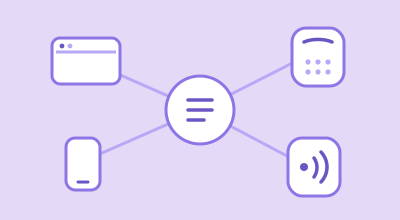
One newsroom, every surface
Lexy launched on Alexa without changing the newsroom's routine, because the architecture makes every new platform a rendering problem instead of a rebuild.
Press one to continue
Voice 1.0 ran on IVR and the dial pad. Everyone hated the menus, but the reach of a plain phone call was the idea that never stopped being true.

The assistant in your pocket
Siri made talking to machines ordinary and put a microphone in two billion pockets. Voice 2.0 built the habit, but not the conversation.
The room becomes an interface
Smart speakers proved people want conversational audio in their routine, and that a voice product is only as durable as the platform underneath it.

Punctuation you can hear
Audio has no typography. How a four-note violin phrase, a one-second beat, and a spoken transition became the punctuation system of the Lexy news brief.
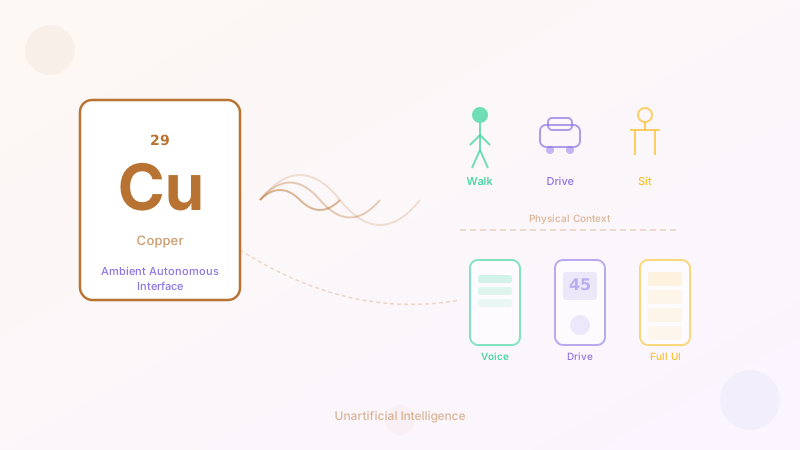
An experiment in unartificial intelligence
Nine years between the theory and the proof. The browser finally caught up to the idea.
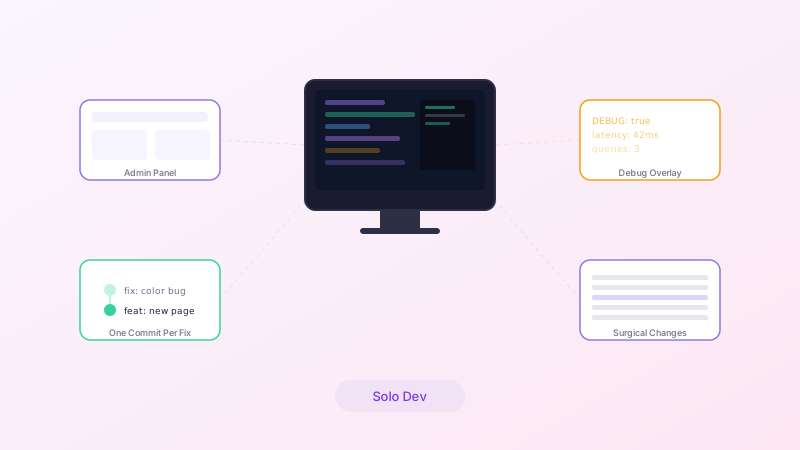
The end of the minimum viable team
For fifty years, building a product meant building an organization first. AI tools collapsed that barrier. The founder who understands the problem can now build the solution directly.
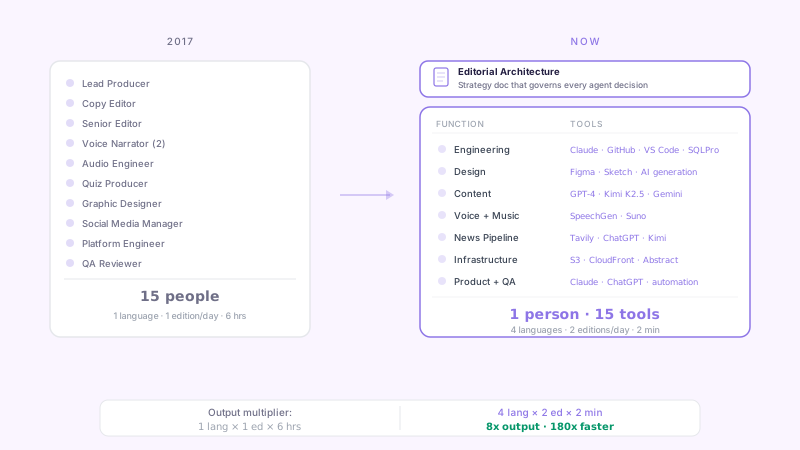
E pluribus unum
The phrase chosen in 1782 to describe a nation now describes what one builder with an orchestrated stack of tools can do.
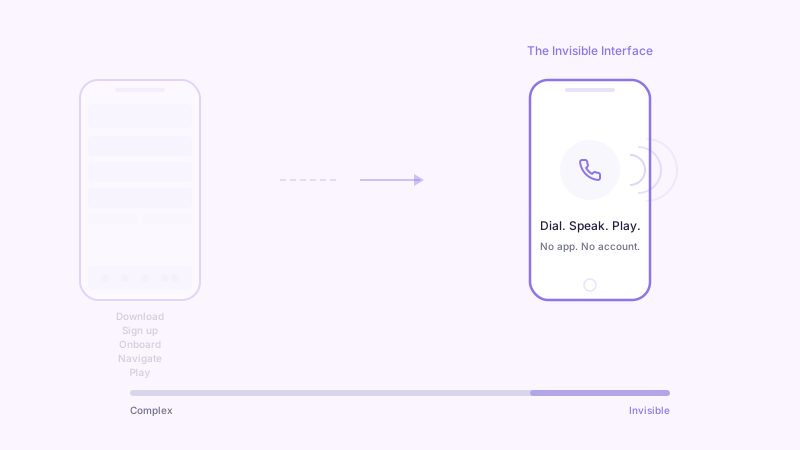
The invisible interface
Twenty years of building voice products, from feature phone audio to sensor-driven apps, led to one conclusion: the best interface is the one that disappears.
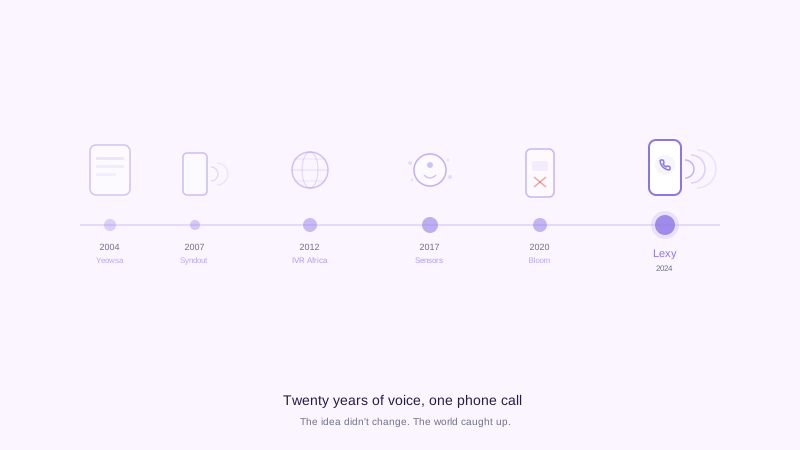
Twenty years to one phone call
From feature phone audio publishing in 2004 to IVR citizen journalism to sensor-driven apps, every product was a fragment. Lexy is the assembly.